
How Architects Reduce Design Revisions with 3D Rendering
Design revisions are a natural part of any architectural project. Clients often need to see multiple iterations before they feel confident in approving a final plan. However, too many revisions can delay progress, increase costs, and create communication challenges.
This is where 3D rendering plays a vital role. By presenting architectural designs in a visual and realistic format, it becomes easier for clients, stakeholders, and councils to understand the concept early in the process, leading to fewer back-and-forth changes.
Why Traditional Drawings Lead to More Revisions
Architects have long relied on 2D plans, technical drawings, and sketches to communicate design intent. While effective for professionals, these formats can be difficult for non-architects to interpret.
Some common issues with traditional presentations include:
- Clients struggle to imagine how the finished project will look.
- Materials, textures, and lighting cannot be fully represented.
- Misunderstandings lead to late-stage changes in layout or design.
The result: multiple revisions that could have been avoided if the vision had been clearer from the start.
How 3D Rendering Simplifies Client Communication
3D rendering transforms abstract concepts into visuals that anyone can understand. Instead of relying on technical drawings, clients can see:
- Photorealistic Exteriors → How the building will sit within its environment.
- Detailed Interiors → Layouts of rooms, furniture arrangements, and finishes.
- Lighting & Materials → Realistic representation of surfaces, colors, and textures.
When clients view these renderings, they gain a much clearer understanding of the project, reducing the likelihood of confusion or late design changes.
Identifying Design Issues Early
Another advantage of 3D rendering is the ability to spot potential issues before construction begins. For example:
- A room might appear too small once visualized in 3D.
- Window placement may not provide the desired natural light.
- Color schemes might not harmonize as expected.
By catching these details early, architects and clients can make adjustments in the design stage rather than during construction, where changes are more complex and disruptive.
Enhancing Presentations for Stakeholders
Beyond client communication, 3D rendering is also valuable for presenting to councils, investors, or tender boards. A 3D visualization provides a clear narrative of the project that goes beyond lines on a page, making discussions more straightforward and reducing the chance of misinterpretation.
Case Example – Visualizing a Residential Project
Imagine presenting a luxury villa to a homeowner using only floor plans and sketches. The client might request multiple revisions, unsure of how the kitchen, living area, or outdoor spaces will look.
By using 3D rendering, the same design can be displayed with accurate finishes, natural light, and furniture layouts. The homeowner can see how the final villa will look, reducing the number of revisions required to finalize the design.
The Role of BIM and Advanced Visualization
When paired with BIM modelling, 3D rendering becomes even more powerful. BIM ensures technical accuracy, while 3D visualization enhances communication. Together, they create a workflow where architects can present both the technical and the aesthetic sides of a project, improving clarity across all stakeholders.
Key Takeaways
- Traditional drawings often create gaps in client understanding.
- 3D rendering provides photorealistic visuals that reduce confusion.
- Issues in space planning, lighting, and finishes can be identified earlier.
- Stakeholder communication becomes more efficient with visual clarity.
Conclusion
Revisions will always be part of architectural design, but with 3D rendering, they can be managed more effectively. By making complex concepts accessible through realistic visuals, architects can guide clients and stakeholders with clarity, resulting in smoother design workflows and fewer unnecessary changes.
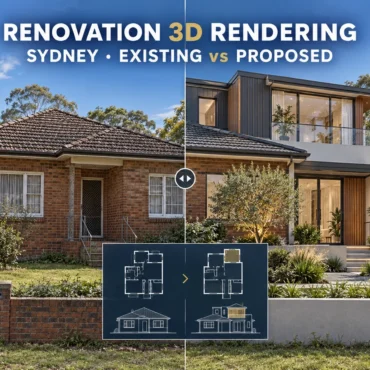
Renovation 3D Rendering Sydney: Existing vs Proposed
Home / Blogs / Renovation visualisation Sydney · Residential architects · Renovation builders Renovation 3D Rendering in Sydney: Compare Existing and Proposed Designs Clearly Help clients understand the actual renovation....
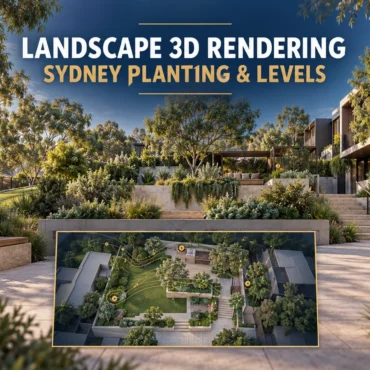
Landscape 3D Rendering Sydney: Planting & Levels
Home / Blogs / Landscape visualisation Sydney · Landscape designers · Architects & builders Landscape 3D Rendering in Sydney: Show Planting, Levels and Outdoor Living Clearly Help clients understand how...
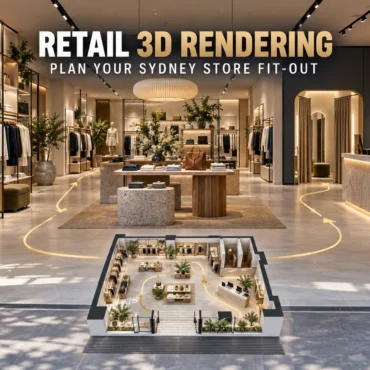
Retail 3D Rendering Sydney: Plan Your Store Fit-Out
Home / Blogs / Retail fit-out visualisation Sydney · Retail designers · Shopfitters Retail 3D Rendering in Sydney: Plan the Customer Journey Before Your Fit-Out A shop needs to do...
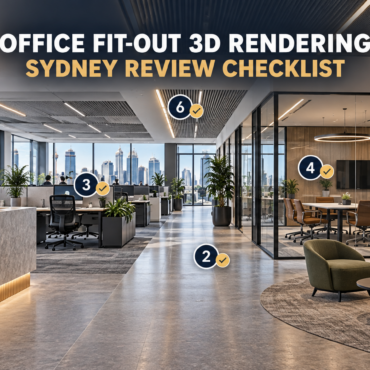
Office Fit-Out 3D Rendering Sydney | Review Checklist
Home / Blogs / Office fit-out visualisation Sydney · Commercial interiors · Project review Office Fit-Out 3D Rendering in Sydney: What to Review Before Design Sign-Off Help clients understand the...
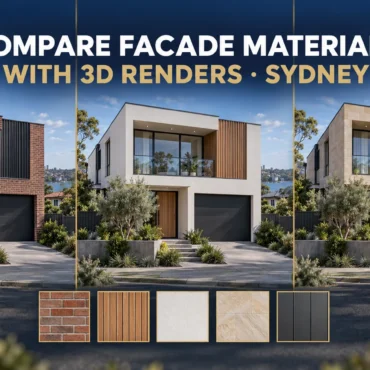
Compare Facade Materials with 3D Renders | Sydney
Home / Blogs / Facade material comparisons Materials · Facades · Design decisions Compare Facade Materials with 3D Renders: A Guide for Sydney Builders and Architects Brick, cladding, stone and...
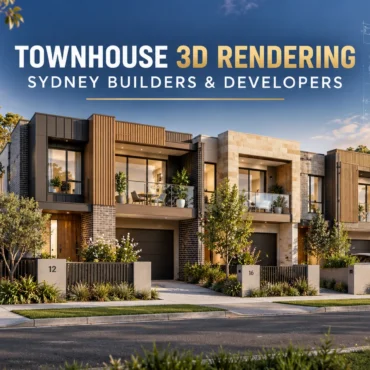
Duplex 3D Rendering Sydney: Show Each Home Clearly
Home / Blogs / Duplex visualisation Sydney · Builders · Property developers Duplex 3D Rendering in Sydney: Show What Makes Each Home Different Two homes can share a facade style...
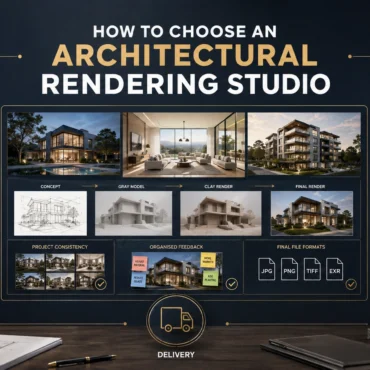
How to Choose an Architectural Rendering Studio
Skip to the answer Home / Blogs / Choosing a rendering studio PORTFOLIO FIT · PROCESS · SCOPE · COMMUNICATION How to Choose an Architectural Rendering Studio in Australia: 10...
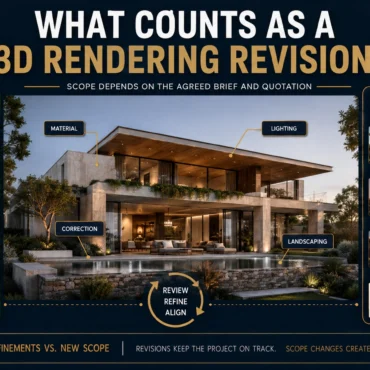
What Counts as a 3D Rendering Revision?
Skip to the answer Home / Blogs / Rendering revisions FEEDBACK ROUNDS · DESIGN CHANGES · CAMERA CONTROL · SCOPE What Counts as a Revision in Architectural Rendering? Feedback, Changes...
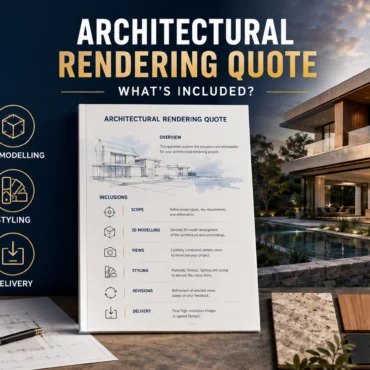
Architectural Rendering Quote: What Is Included?
Skip to the answer Home / Blogs / Rendering quote inclusions SCOPE · REVISIONS · DELIVERABLES · CHANGE CONTROL What Is Included in an Architectural Rendering Quote? Scope, Revisions and...
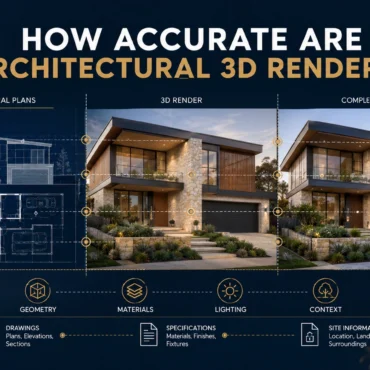
How Accurate Are Architectural 3D Renders?
Skip to the answer Home / Blogs / Render accuracy GEOMETRY · MATERIALS · CAMERAS · ASSUMPTION CONTROL How Accurate Are Architectural 3D Renders? Geometry, Materials and Assumptions Explained A...