
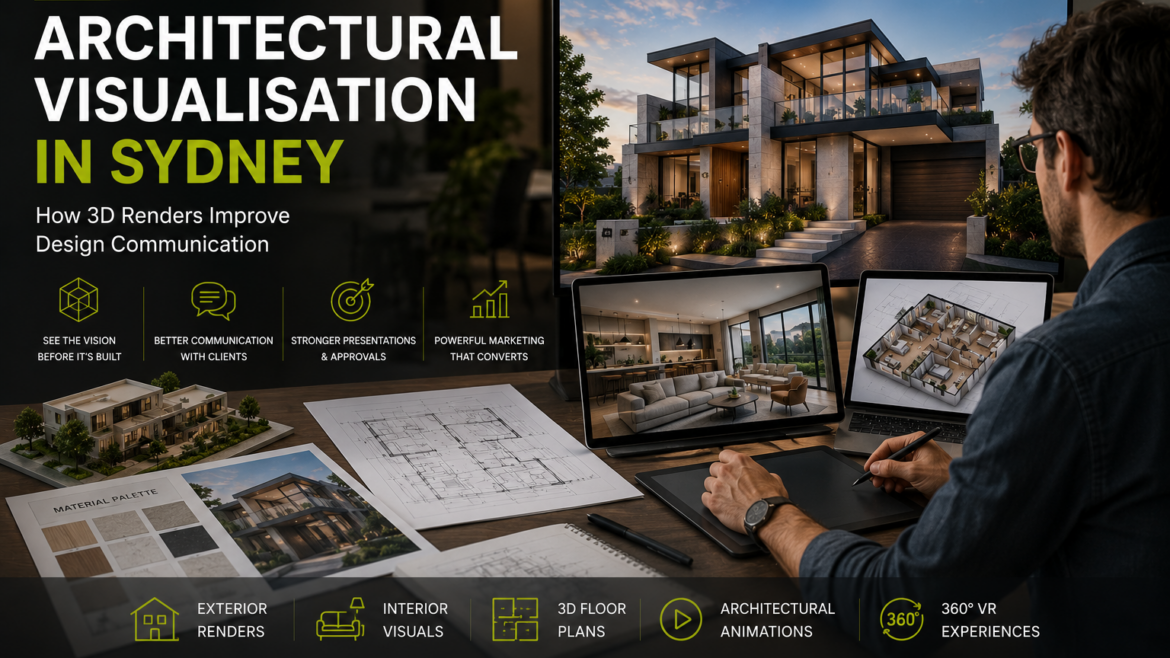
Architectural Visualisation in Sydney: How 3D Renders Improve Design Communication
Sydney Architectural Visualisation
Architectural Visualisation in Sydney: How 3D Renders Improve Design Communication
Architectural visualisation in Sydney helps architects, builders, developers and designers turn drawings, ideas and technical plans into clear visual stories. From exterior 3D renders and interior visuals to floor plans, animations and 360 VR, architectural visualisation makes a project easier to understand before it is built.

Architecture is often communicated through plans, elevations, sections, schedules and technical documents. These are essential for professional teams, but they are not always easy for clients, investors, buyers or non-technical stakeholders to understand.
This is where 3D architectural visualisation Sydney services become useful. A 3D visual can show how a building may look, how a room may feel, how spaces connect, how materials may work together and how the overall project can be presented in a more engaging way.
For Sydney projects, architectural visualisation can support early design conversations, client presentations, builder proposals, developer marketing, property sales campaigns and internal decision-making. It can be used for residential homes, apartments, townhouses, commercial buildings, offices, retail spaces, hospitality projects and mixed-use developments.
For dedicated location-based service information, explore our 3D rendering services in Sydney page.
What Is Architectural Visualisation?
Architectural visualisation is the process of creating visual representations of architectural projects before they are physically built. It can include still images, 3D renders, walkthrough videos, fly-through animations, 3D floor plans, virtual reality scenes and presentation visuals.
In simple terms, architectural visualisation helps people see a design before it exists in real life. It turns technical drawings and design intent into visual assets that are easier to review, discuss and share.
Explains the Design
It shows building form, layout, materials, lighting, scale, surroundings and atmosphere in a way that is easier to understand than drawings alone.
Supports Communication
Architects, builders and developers can use visuals to explain ideas clearly to clients, investors, buyers and project teams.
Creates Marketing Assets
Visualisation can be used in brochures, websites, project pages, sales decks, digital ads and social media campaigns before completed photography is available.
Why Architectural Visualisation Matters for Sydney Projects
Sydney has a wide mix of architectural and property project types — apartments, townhouses, renovations, duplexes, luxury homes, retail fit-outs, commercial offices and mixed-use developments. Each type has different design communication needs.
1. It Makes Complex Designs Easier to Understand
A technical drawing may show dimensions and structure, but a 3D render can show how the space may actually look and feel. This is helpful when clients or stakeholders need a clearer view of the final design direction.
2. It Improves Design Review Conversations
Visuals make discussions around facade materials, interior finishes, lighting, landscaping, layout and building character more practical. Instead of relying only on imagination, everyone can respond to the same visual reference.
3. It Supports Property Marketing Before Completion
Developers and agents often need project visuals before a building is ready for photography. Architectural visualisation can support pre-sales, investor decks, display suite material, listing content and digital campaigns.
4. It Helps Align Multiple Stakeholders
Sydney projects may involve architects, clients, consultants, builders, marketing teams and decision-makers. A shared visual helps bring everyone closer to the same understanding of the design.
For project-specific services, you may also explore exterior 3D rendering in Sydney, interior 3D rendering in Sydney and 3D floor plans in Sydney.
Types of Architectural Visualisation Used in Sydney Projects
The right visual format depends on the project stage, audience and purpose. Some projects need one hero exterior render, while others need a complete visual package with interiors, floor plans, animation and virtual experience.
| Visualisation Type | What It Shows | Useful For |
|---|---|---|
| Exterior 3D Rendering | Facade, building form, landscaping, street view, lighting and surroundings. | Architectural presentations, property marketing and development visuals. |
| Interior 3D Rendering | Furniture, finishes, lighting, room layout, styling, joinery and atmosphere. | Interior design review, client presentations and off-the-plan marketing. |
| 3D Floor Plans | Layout, furniture arrangement, room flow and spatial relationships. | Real estate listings, sales brochures, unit comparison and buyer understanding. |
| Architectural Animation | Movement through a building, entry sequence, room-to-room flow and project experience. | Launch videos, presentations, website content and social media campaigns. |
| 360 VR Visualisation | Interactive room or project experience where users can look around a space. | Remote presentations, premium property marketing and immersive design review. |
| Product or Furniture Visualisation | Objects, fixtures, furniture, materials or products in realistic scenes. | Catalogues, ecommerce visuals, product marketing and interior styling presentations. |
Many Sydney clients use a combination of these outputs depending on the project. For example, a developer may need exterior renders, apartment interior visuals, 3D floor plans and an architectural walkthrough video for a launch campaign.
Who Uses Architectural Visualisation in Sydney?
Architectural visualisation is useful for both design communication and marketing. It supports professionals who need to explain a project before construction, fit-out or photography is complete.
Architects
Architects use visualisation to communicate facade intent, building form, massing, interiors, spatial quality and design mood to clients and stakeholders.
Related resource: 3D rendering for architects.
Builders
Builders can use renders and visual assets to explain project outcomes, finish selections and design options during proposal and planning discussions.
Property Developers
Developers use architectural visualisation for pre-sales, investor communication, brochure visuals, website content, display suite assets and campaign material.
Related resource: 3D rendering for real estate developers.
Interior Designers
Interior designers use 3D visuals to explain room layouts, material palettes, furniture selections, lighting mood and design options before implementation.
Related resource: 3D rendering for interior designers.
Real Estate Marketers
Marketers and agents can use visualisation when photography is not yet available, especially for off-the-plan apartments, townhouses and development projects.
Homeowners & Renovators
Homeowners can use 3D visuals to understand design ideas, renovation layouts, facade changes and interior finishes before making decisions.
How an Architectural Visualisation Workflow Usually Works
A clear workflow helps keep expectations aligned. The exact process depends on the deliverables, but most architectural visualisation projects follow a structured path.
Brief Review
The team reviews drawings, plans, elevations, site information, references, mood boards and the purpose of the visual assets.
3D Modelling
The building, rooms, site elements, furniture or product components are digitally modelled based on the supplied project information.
Camera & Scene Setup
Angles, views, lighting direction, environment and composition are selected based on what the visual needs to communicate.
Materials & Styling
Colours, textures, furniture, landscape, fixtures, finishes and styling details are added based on the project brief.
Draft Review
Draft visuals are reviewed so feedback can be shared on materials, views, lighting, styling or other agreed design details.
Final Output
Final images, animations, floor plans or VR outputs are prepared based on the agreed scope and intended usage.
Before starting, confirm the required deliverables, number of views, output format, resolution, usage purpose and revision scope. This helps keep the project clear from the beginning.
Architectural Visualisation Brief Checklist
A strong brief helps the visualisation team understand the project faster and create visuals that match the purpose. Below are useful inputs to prepare.
Files to Share
- Architectural drawings, CAD files or PDF plans
- Floor plans, elevations and sections
- Site plan, landscape plan or context information
- Material schedule and finish references
- Interior mood boards or furniture references
- Preferred camera angles or example visuals
- Brand, brochure or marketing requirements
- Output size, format and usage requirements
Questions to Confirm
- Is the visual for design review, client presentation or marketing?
- Do you need exterior renders, interiors, floor plans, animation or VR?
- How many final views or assets are required?
- Should the style feel premium, minimal, coastal, urban, warm or technical?
- Are there specific materials or products that must be shown?
- Will the visuals be used for print, website, social media or investor presentation?
- Is there a required brand or campaign style to follow?
Need architectural visualisation for a Sydney project?
Share your drawings, design references, material notes or project brief. Our team can review the scope and suggest a suitable 3D visualisation approach based on your project requirements.
Common Architectural Visualisation Mistakes to Avoid
Architectural visualisation is most useful when the visual matches the project goal. Avoiding a few common mistakes can make the process clearer and more effective.
Starting Without a Clear Purpose
A render for design review may need different detail than a render for marketing. Confirm whether the visual is for presentation, discussion, sales, approval support or internal review.
Using Unfinalised Material References
If facade, interior or finish selections are not clear, the final visual may not match the intended direction. Share updated references before production starts.
Choosing Too Many Views Without Strategy
Every view should have a job. A hero exterior angle, a kitchen render, a floor plan and a walkthrough each serve different communication needs.
Ignoring Final Usage Format
A visual for a website, brochure, billboard, social post or investor deck may need different orientation, resolution and composition. Confirm this early.
Helpful Internal Resources
- 3D Rendering Services in Sydney
- 3D Rendering Services in Sydney Guide
- Exterior 3D Rendering in Sydney
- Interior 3D Rendering in Sydney
- 3D Floor Plans in Sydney
- 3D Rendering Portfolio
- Architectural Animation Services
- 2D & 3D Floor Plan Services
- 360 VR Experience Services
- 3D Rendering for Architects
- 3D Rendering for Real Estate Developers
- Contact 3D Space Design
Please update any internal URLs if the final live slug differs from the suggested structure.
Frequently Asked Questions About Architectural Visualisation in Sydney
What is architectural visualisation?
Architectural visualisation is the process of creating visual representations of buildings, interiors, spaces or developments before they are physically built. It can include 3D renders, animations, floor plans, virtual tours and presentation visuals.
Who uses architectural visualisation in Sydney?
Architectural visualisation is used by architects, builders, property developers, interior designers, real estate marketers, homeowners, renovators and commercial project teams.
What is the difference between architectural rendering and architectural visualisation?
Architectural rendering usually refers to still 3D images, while architectural visualisation is a broader term that can include still renders, animations, floor plans, 360 VR, walkthroughs and other visual presentation formats.
Can architectural visualisation be used for property marketing?
Yes. Architectural visualisation can be used in brochures, websites, project landing pages, listing presentations, social media campaigns, investor decks and off-the-plan marketing material.
What files are needed for architectural visualisation?
Helpful files include architectural drawings, CAD files, PDF plans, elevations, sections, material schedules, site plans, landscape references, mood boards and preferred visual examples.
Can visualisation include both interior and exterior renders?
Yes. Many projects include both interior and exterior visuals to present the full design experience, especially for homes, apartments, commercial interiors and property developments.
Can architectural visualisation include animation or 360 VR?
Yes. Depending on the project scope, architectural visualisation can include walkthrough videos, fly-through animations and 360 VR experiences for a more immersive presentation.
How much does architectural visualisation cost in Sydney?
The cost depends on deliverables, number of views, modelling detail, interiors, exteriors, animation length, VR requirements, material complexity, revision scope and final output format. Sharing the project brief helps prepare a more accurate estimate.
Need architectural visualisation for a Sydney project?
Send your drawings, references, project goals or visual brief. Our team can review the scope and suggest a suitable visualisation format for your project.